
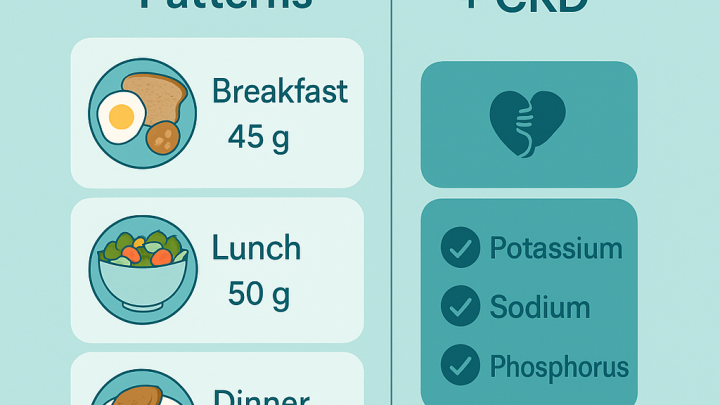
Diabetes + CKD: Designing Carb Patterns Without Compromising Renal Safety
Carb patterns for glycemic control can coexist with renal electrolyte limits if you route choices through labs (e.g., A1C, eGFR, K/Phos), medications, and culturally familiar foods. Use staged constraints and substitution logic; keep clinician overrides visible (ADA, 2025; KDIGO, 2024; KDOQI, 2020). American Diabetes AssociationKDIGOAJKD
Step 1 — Start with the data
- Glycemia: A1C and SMBG/CGM patterns guide carb distribution and fiber emphasis (ADA, 2025). American Diabetes Association
- Renal status: eGFR category and albuminuria stage define sodium/potassium/phosphate vigilance and protein targets (KDIGO, 2024; KDOQI, 2020). KDIGOAJKD
Step 2 — Choose carb sources that respect electrolytes
Prefer low-K fruits/grains and legume portions compatible with the patient’s labs; leverage phosphate-aware dairy/alt-dairy choices when phosphorus is elevated; document the rationale (KDOQI, 2020). AJKD
Step 3 — Medication-aware timing
If using prandial insulin or SGLT2/GLP-1 agents, align carb amount with hypoglycemia risk and GI tolerance; incorporate any flagged food–drug interactions (ADA, 2025; FDA, 2021). American Diabetes AssociationU.S. Food and Drug Administration
Step 4 — Iterate with labs
Plans should regenerate as labs change (e.g., K trending up, eGFR down), with versioned documentation and patient-facing education (KDIGO, 2024; ADA, 2025). KDIGOAmerican Diabetes Association